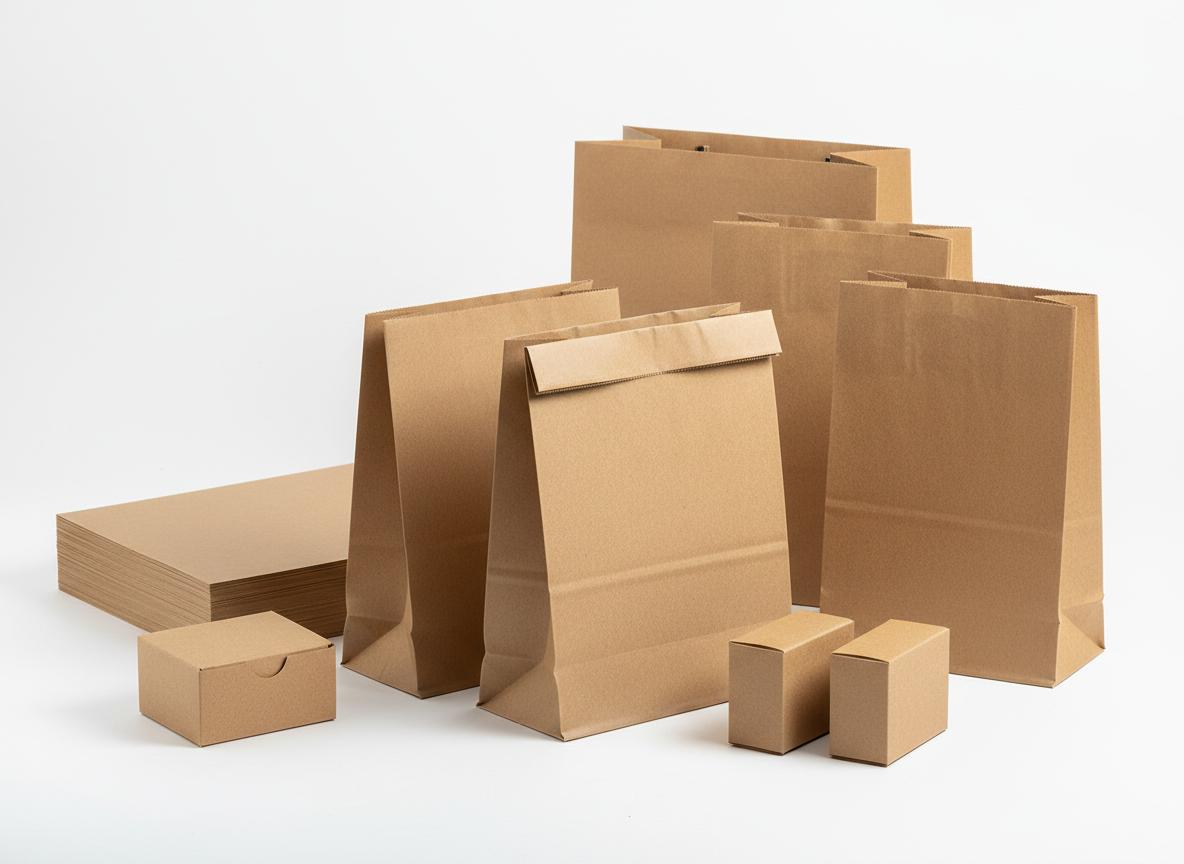
Carbon credits have become a mainstream tool for businesses looking to offset their environmental impact. But for many companies, the concept remains abstract — especially when it comes to packaging, which represents a significant but often overlooked portion of a business's total carbon footprint. This guide explains how carbon credits work, how they relate to packaging decisions, and how to communicate your sustainability efforts to customers authentically.
What Are Carbon Credits?
A carbon credit represents one metric ton of carbon dioxide equivalent (CO₂e) that has been prevented from entering the atmosphere or removed from it. Carbon credits are generated by projects that reduce or capture greenhouse gas emissions: reforestation, renewable energy installations, methane capture from landfills, and similar initiatives.
Businesses purchase carbon credits to "offset" emissions they can't eliminate directly. If your operations produce 100 tons of CO₂e per year and you purchase 100 carbon credits, you've theoretically neutralized your carbon footprint. In practice, the quality and verifiability of carbon credits varies enormously, which is why the packaging material you choose matters as much as the credits you buy.
Your Packaging's Carbon Footprint
Packaging typically accounts for 5–15% of a product's total carbon footprint, depending on the industry. For some sectors — particularly food service, retail, and e-commerce — packaging can represent an even larger share because of the sheer volume used.
The carbon footprint of packaging includes raw material extraction or cultivation, processing and manufacturing, transportation, and end-of-life disposal or recycling. Each stage contributes emissions, and the total varies dramatically by material.
Plastic packaging carries a heavy carbon footprint because it's derived from petroleum — a fossil fuel. The extraction, refining, and polymerization of plastic all release significant CO₂. Tree paper's carbon footprint is complex: trees absorb carbon as they grow, but logging, transportation, pulping (which is energy-intensive), and chemical processing all generate emissions. The net carbon impact of tree paper depends heavily on whether the forests are replanted and how the paper is disposed of at end of life.
Hemp Packaging and Carbon
Hemp has a unique position in the packaging carbon equation because of its rapid growth cycle and high carbon absorption rate. During its 120-day growing period, an acre of hemp absorbs significantly more CO₂ than an acre of trees absorbs in the same timeframe. Some estimates place hemp's carbon absorption at 4–5 times that of equivalent acreage of trees on an annual basis.
This means that the raw material phase of hemp packaging actually represents net carbon absorption rather than net carbon emission. The hemp plant pulls CO₂ out of the atmosphere as it grows, and that carbon is then locked into the paper product until it decomposes or is recycled.
Hemp paper production also requires less chemical processing than tree paper (due to lower lignin content), which translates to lower energy consumption and fewer processing-related emissions. And because hemp can be grown without pesticides, there are no emissions associated with petrochemical pesticide manufacturing and application.
Carbon Credits vs Material Choices
Here's the critical insight that many sustainability programs miss: it's more effective to reduce emissions at the source than to offset them after the fact.
Buying carbon credits to offset the emissions from petroleum-based plastic packaging is like running your car engine with the windows open and buying an air purifier for the room. It's technically addressing the problem, but it would be more effective to just turn off the engine.
Switching from conventional packaging to hemp packaging reduces your packaging carbon footprint at the source. You're not generating emissions and then paying to offset them — you're using a material that absorbs carbon during production. This is a fundamentally stronger sustainability position.
That said, carbon credits still have a role. Even with the most sustainable packaging materials, your business will have emissions from transportation, energy use, and other operations that can't be fully eliminated. Carbon credits can address this residual footprint. The most credible sustainability strategy combines material improvements (like switching to hemp packaging) with carbon credits for remaining emissions.
Communicating to Customers
How you communicate your sustainability efforts matters almost as much as the efforts themselves. Consumers are increasingly sophisticated about greenwashing, and vague claims like "eco-friendly" or "green" can actually damage brand trust.
Be specific. Instead of "sustainable packaging," say "100% hemp fiber, USDA BioPreferred certified, backyard compostable." Specific, verifiable claims build more trust than broad ones.
Show certifications. Third-party certifications like USDA BioPreferred, BPI Compostable, or verified carbon offsets provide credibility that self-declared claims don't. Display certification marks on your packaging and in your communications.
Quantify impact. "Our hemp paper bags save approximately 10 trees per 10,000 bags" is more impactful than "our bags help the environment." Numbers make abstract sustainability claims concrete and memorable.
Acknowledge the journey. Consumers respect honesty. Saying "We've switched our retail bags to hemp paper and are working on transitioning our shipping materials next" is more credible than claiming to be 100% sustainable when you're not.
Getting Started With Sustainable Packaging
If you're ready to reduce your packaging carbon footprint at the source, hemp paper is one of the most impactful switches you can make. Every 1,000 hemp paper bags replaces approximately one tree's worth of conventional paper production, while the hemp that grew to make those bags actively absorbed CO₂ during its 120-day growth cycle.
Combined with verified carbon credits for your remaining emissions, a switch to hemp packaging creates a comprehensive and credible sustainability story that resonates with customers and stands up to scrutiny.
Understanding Carbon Offset Quality
Not all carbon credits are equal. The voluntary carbon market has faced criticism for projects that overstate their impact or would have happened regardless of credit sales (known as "additionality" concerns). If you're going to purchase carbon credits to complement your packaging sustainability, quality matters.
Look for credits verified under established standards like the Gold Standard, Verified Carbon Standard (Verra), or the American Carbon Registry. These standards require rigorous project evaluation, independent verification, and ongoing monitoring. Credits from unverified sources may look good on paper but represent uncertain climate impact.
For businesses in the early stages of their sustainability journey, it's often more impactful (and more credible) to focus first on material improvements — like switching to hemp packaging — and then layer in carbon credits for emissions you genuinely can't reduce further. This "reduce first, offset remaining" approach is the framework recommended by most credible sustainability frameworks, including the Science Based Targets initiative.
Calculating Your Packaging Carbon Footprint
To understand the carbon impact of your packaging choices, you need to account for several factors. Raw material production is the starting point: how much carbon was emitted (or absorbed) to create the packaging material? For petroleum-based plastics, this is substantial. For tree paper, it's moderate. For hemp paper, it's actually negative during the cultivation phase.
Manufacturing converts raw materials into finished packaging. Energy consumption during this process generates emissions. Transportation moves materials from farms to mills to manufacturers to your business. Shipping weight and distance both affect the carbon cost. End of life determines what happens to the packaging after use. Landfilled packaging releases methane as it decomposes. Recycled packaging avoids the carbon cost of virgin material production. Composted packaging returns carbon to soil.
A full lifecycle carbon assessment of your packaging is the gold standard, but even a simplified analysis — comparing the raw material phase of your current packaging versus hemp alternatives — will reveal the magnitude of the opportunity.
Frequently Asked Questions
Does switching to hemp packaging eliminate the need for carbon credits? No. Hemp packaging reduces your packaging-related carbon footprint, but your business has other emission sources (energy, transportation, operations) that packaging material choice doesn't address. Carbon credits remain a valuable tool for offsetting those non-packaging emissions.
How much carbon does switching to hemp bags actually save? A rough estimate: every 1,000 hemp bags used instead of tree paper bags saves approximately one tree, and the hemp that grew to produce those bags absorbed approximately 48 lbs of CO₂ during its growth cycle. For a business using 100,000 bags annually, that's roughly 4,800 lbs of CO₂ absorbed during hemp cultivation alone, plus the avoided emissions from not harvesting and processing 100 trees.
Can I claim "carbon neutral packaging" if I use hemp bags? We recommend caution with "carbon neutral" claims unless you've conducted a full lifecycle assessment that accounts for all emissions in your packaging supply chain, including manufacturing and transportation. It's more accurate and credible to say "our packaging is made from carbon-absorbing hemp fiber" — this is a verifiable material fact rather than a calculated claim that could be challenged.
Are carbon credits tax deductible? In many cases, yes. Carbon credit purchases can be treated as a business expense. Consult with your tax advisor for specifics applicable to your business structure and jurisdiction.
What should I communicate to customers about carbon and packaging? Lead with the tangible: "Our bags are made from 100% hemp — a crop that absorbs more carbon than trees." Follow with the specific: "USDA BioPreferred certified at 100% biobased content." Avoid vague claims like "eco-friendly" or "carbon neutral" unless you have the data and certification to back them up. Consumers increasingly reward specificity and punish greenwashing.
Ready to switch to hemp paper packaging?
Get a quote for ZERO TREE™ hemp paper bags, cartons, and custom packaging.
Get a Quote →