If you've ever had a paper bag tear on the way to your car, you already understand why material strength matters in packaging. Traditional tree-based paper bags have been the default for decades, but they come with an inherent weakness: short wood fibers that create a paper structure prone to tearing under stress. Hemp paper changes this equation fundamentally.
At Hemp Paper Company, our hemp paper bags are independently tested to be approximately twice as strong as conventional tree paper. But this isn't marketing spin — it's fiber science. Let's break down exactly why hemp paper outperforms tree paper in strength, and what that means for businesses using paper packaging.
The Science of Fiber Length
The strength of any paper product is determined primarily by its fiber composition. Paper is essentially a web of interlocked plant fibers — the longer and more tightly those fibers bond together, the stronger the resulting sheet.
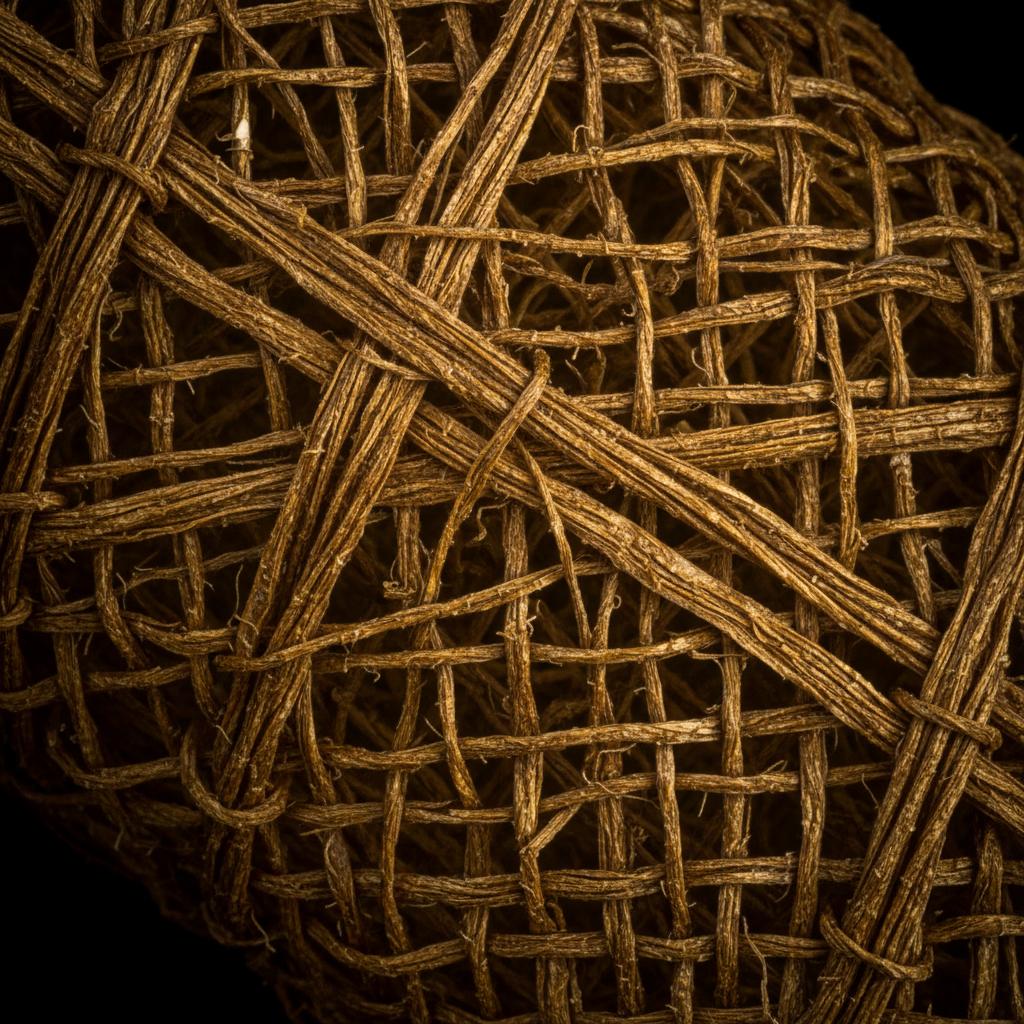
Hemp bast fibers measure between 13 and 25 millimeters in length. By comparison, softwood fibers used in conventional paper typically measure between 2 and 5 millimeters. That's a 4–5x difference in individual fiber length, which translates directly into a more interlocked, tear-resistant paper matrix.
When these longer hemp fibers are processed into pulp and pressed into sheets, they create dramatically more contact points between fibers. Each contact point is a bond. More bonds mean more resistance to tearing, puncture, and weight stress. This is why hemp paper can hold up to 20 pounds in a single bag without reinforcement.
Cellulose Content: Hemp's Hidden Advantage
Cellulose is the primary structural component of paper. It's the molecule that gives paper its rigidity, flexibility, and strength. The more cellulose a raw material contains, the more efficiently it converts into strong paper.
Dried hemp stalks contain approximately 57% cellulose. Wood, by comparison, contains between 40% and 50% cellulose. This higher cellulose concentration means that pound-for-pound, hemp produces more usable paper fiber with less waste material.
But the advantage goes further. Wood contains 20–35% lignin — the compound that makes wood rigid but actually weakens paper over time (it's what causes old newspapers to yellow and become brittle). Hemp contains only 5–24% lignin, meaning less chemical processing is needed to remove it, and the resulting paper retains more of its natural strength.
Tear Resistance in Real-World Conditions
Lab numbers are one thing. Real-world performance is another. Here's where hemp paper bags prove their value for businesses:
Wet strength. One of the biggest failure modes for paper bags is moisture. A conventional tree paper bag that encounters rain, condensation, or a leaking container will lose structural integrity rapidly. Hemp fibers are naturally more resistant to moisture degradation. Our hemp bags maintain significantly more of their dry strength when exposed to humidity and light moisture.
Fold endurance. Paper bags get creased, folded, stuffed, and carried. Each fold creates a stress point where conventional paper tends to fail. Hemp paper's longer fiber structure distributes fold stress across a wider area, resulting in dramatically higher fold endurance. This is the same property that made hemp the preferred material for paper currency and legal documents for centuries.
Load bearing. Our 70 GSM hemp paper bags are rated to hold up to 20 pounds. A comparable tree-paper bag at the same weight would typically be rated for 8–12 pounds before risking failure. This means businesses can confidently use hemp bags for heavier retail items, groceries, and restaurant takeout without doubling up bags.
Why This Matters for Your Business
Bag failure is a direct customer experience problem. When a bag tears and a customer's purchase hits the ground, that's a negative brand moment. It may seem like a small thing, but packaging is a touchpoint — it's the last physical interaction a customer has with your brand before they leave your store.
Stronger hemp bags mean fewer failures, which means fewer negative customer moments. They also mean you can use a single bag where you might previously have double-bagged, reducing your per-transaction packaging cost and waste.
For food service businesses specifically, hemp paper's superior wet strength is a game-changer. Takeout bags that can handle the moisture from hot food containers without disintegrating solve a real operational problem.
The Recyclability Bonus
Hemp paper's longer fibers don't just make it stronger on the first use — they also make it more recyclable. Tree-based paper can typically be recycled 3 times before the fibers become too short to bond effectively. Hemp paper can be recycled up to 8 times, because those longer fibers maintain enough length through multiple recycling cycles to continue producing usable paper.
This means hemp paper bags have a longer total lifecycle, which amplifies their environmental advantage. Every hemp bag that gets recycled instead of landfilled represents saved resources across multiple use cycles.
How We Test Our Paper
Every batch of Hemp Paper Company bags undergoes testing across multiple strength metrics: tensile strength (resistance to pulling apart), tear strength (resistance to ripping), burst strength (resistance to puncture), and fold endurance. We also conduct load testing with weighted fills to verify real-world performance.
Our products carry USDA BioPreferred certification at 100% biobased content, which includes independent verification of material composition. When we say 100% hemp fiber, it's been verified by a third party.
The Bottom Line
Hemp paper is stronger than tree paper because of fundamental material science: longer fibers, higher cellulose content, lower lignin, and superior moisture resistance. These aren't marginal improvements — they represent a roughly 2x strength advantage that translates into real business benefits: fewer bag failures, lower double-bagging costs, better customer experience, and a more recyclable product at end of life.
The paper industry spent the last 150 years optimizing around wood because it was cheap and abundant, not because it was the best fiber for paper. Hemp was the dominant paper fiber for thousands of years before that — and the science shows why.
Frequently Asked Questions
How is hemp paper strength tested? Paper strength is measured through standardized tests including tensile strength testing (ISO 1924), tear resistance testing (Elmendorf method, ISO 1974), and burst strength testing (Mullen test, ISO 2758). Our hemp paper consistently outperforms tree paper across all three metrics at equivalent grammage (weight per square meter).
Does hemp paper lose strength when printed on? No. The printing process (flexographic printing with up to 4 colors) does not meaningfully reduce the structural strength of hemp paper. The inks and coatings we use are food-contact compliant and do not compromise the fiber matrix that gives hemp paper its strength.
Can hemp paper replace tree paper in all applications? For packaging applications — bags, cartons, boxes, wrapping — hemp paper is a direct replacement that outperforms tree paper. For specialized applications like high-speed copier paper or glossy magazine stock, the processing technology is still developing, though hemp-blend papers are already available for many printing applications.
Is hemp paper more expensive because it's stronger? The price premium on hemp paper is primarily due to supply chain scale, not material cost. As hemp cultivation and processing infrastructure grows, prices are expected to approach parity with tree paper. The strength advantage is an inherent property of hemp fiber that comes at no additional manufacturing cost.
How does hemp paper handle in humid climates like Hawaii? Exceptionally well. Hemp fiber's natural moisture resistance makes it particularly well-suited for tropical and humid environments where conventional tree paper bags tend to soften and lose strength. This is one reason Hemp Paper Company has found strong demand in Hawaii's food service and retail markets.
What's the difference between bast fiber and hurd? Hemp stalks have two distinct fiber types. The outer bast fiber is the long, strong fiber used for paper and textiles — these are the 13–25mm fibers that give hemp paper its strength. The inner hurd (or shiv) is shorter and more absorbent, used primarily for animal bedding, hempcrete construction material, and lower-grade paper products. High-quality hemp paper like ours uses primarily bast fiber for maximum strength.
How does hemp paper compare to bamboo paper? Both are alternatives to tree paper, but they differ significantly. Bamboo fibers are shorter than hemp fibers, producing paper that's stronger than tree paper but not as strong as hemp paper. Bamboo also takes 3–5 years to reach harvest maturity compared to hemp's 120 days, and most bamboo paper is produced in Asia with significant transportation emissions to reach U.S. markets. Hemp can be grown domestically, further reducing its environmental footprint.
Ready to switch to hemp paper packaging?
Get a quote for ZERO TREE™ hemp paper bags, cartons, and custom packaging.
Get a Quote →