In December 1884, the Washington Monument was capped with a 100-ounce pyramid of aluminum. At the time it was the largest piece of aluminum ever cast, and it was chosen because aluminum was one of the most precious metals on earth, running around $1.10 an ounce. Comparable to silver.
Not because it was rare in the ground. Aluminum is the most abundant metal in the earth's crust. It was expensive because nobody had figured out how to separate it at scale yet. Two years later, two chemists independently cracked the electrolytic process, and within a generation the precious metal on top of the monument was what you wrapped a sandwich in.
Somebody bought aluminum at silver prices first. That purchase is why the price fell.
The pattern repeats and nobody names it
The first commercial solar panels cost hundreds of dollars per watt. Buyers existed anyway: satellites, remote telemetry, offshore rigs. Each had a problem no wire could solve, so each paid an enormous premium for a product that, by any normal standard, was worse than the grid.
Those purchases funded the manufacturing learning curve. Every doubling of cumulative production knocked the cost down again. The people who paid $100 a watt did not get a good deal. They got the industry.
The first electric cars had less range, cost more, and had nowhere to charge. Early buyers were mocked for it. Those orders paid for the battery plants that made the next generation unremarkable.
In every one of these stories the first customer is invisible. We remember the inventor, sometimes the company. Nobody writes about the procurement officer who signed off on the expensive, inferior version and absorbed the internal argument that came with it.
They are, in every case, the reason the thing exists.
Where hemp paper breaks the pattern
Here is where the analogy stops being flattering to those other industries, and starts being useful.
Early aluminum really was worse for most uses. So was early solar. So were early EVs.
Hemp paper is not a weaker version of tree paper. It is made from a longer fiber.
In a peer-reviewed comparison measuring both under the same method, hemp bast pulp fiber averaged 5.76 mm against softwood pulp's 3.27 mm. Paper strength comes substantially from fibers overlapping and bonding to one another, and length is one of the first properties a papermaker looks at. Our sheet is 100% hemp fiber, USDA Certified Biobased at 100% biobased content, made in the USA, and it comes off an annual crop harvested in roughly four months rather than a tree on a twenty to thirty year rotation.
So the premium buys something specific. You are not paying extra for a weaker bag. You are paying for a supply chain that has not been built yet.
That is a completely different thing, and it is worth being precise about which one you are buying.
What the premium is actually paying for
Commodity tree kraft has had a century of scale, amortized mills, and a continental logistics network built around it. Hemp fiber in America has roughly twenty processors online and a decortication machine that runs around $229,000 with no federal program to finance it.
When you pay more per bag, you are not paying for artisanal virtue. You are paying the difference between an industry with infrastructure and an industry building it.
Every order placed today is a signal into that system. Not in a sentimental way. In the literal way that demand signals finance equipment.
The uncomfortable part
We are not going to tell you the switch is free. Our bags run roughly $0.12 to $0.235 depending on size and volume. Commodity kraft sits below that. Anyone in this industry who pretends otherwise is selling you something and hoping you do not check.
What the difference buys you is a hemp paper bag made from an annual crop instead of a tree, a federal third-party certification instead of a marketing badge, and a claim you can defend when a regulator or a customer asks.
And you get one more thing that does not show up on the invoice: you become one of the reasons the price comes down for whoever buys next.
Nobody is going to thank you for it
That is the honest close.
There is no plaque for the first buyer. The aluminum story belongs to the chemists. The solar story belongs to the physicists. The EV story belongs to the founders. The purchasing manager who paid too much, early, so the curve could start bending — that person is a line item in a budget nobody kept.
But every material that ever became ordinary had one. Steel had one. Plastic had one. Every single thing you now consider cheap and obvious was, at some point, an expensive decision somebody had to defend in a meeting.
Somebody has to buy the first one.
It might as well be a company that was going to buy bags anyway.
Sources
Fiber length comparison, hemp bast pulp 5.76 mm versus softwood 3.27 mm measured under the same method: Ercin et al., Heliyon, 2024 (PMC10850592). US hemp fiber processor count and decorticator cost: HempToday and North America hemp processing machinery market analyses, 2026. Aluminum at the Washington Monument apex and the 1886 Hall-Héroult process, early photovoltaic module pricing, and early EV adoption are matters of public historical record.
Be the reason the price comes down
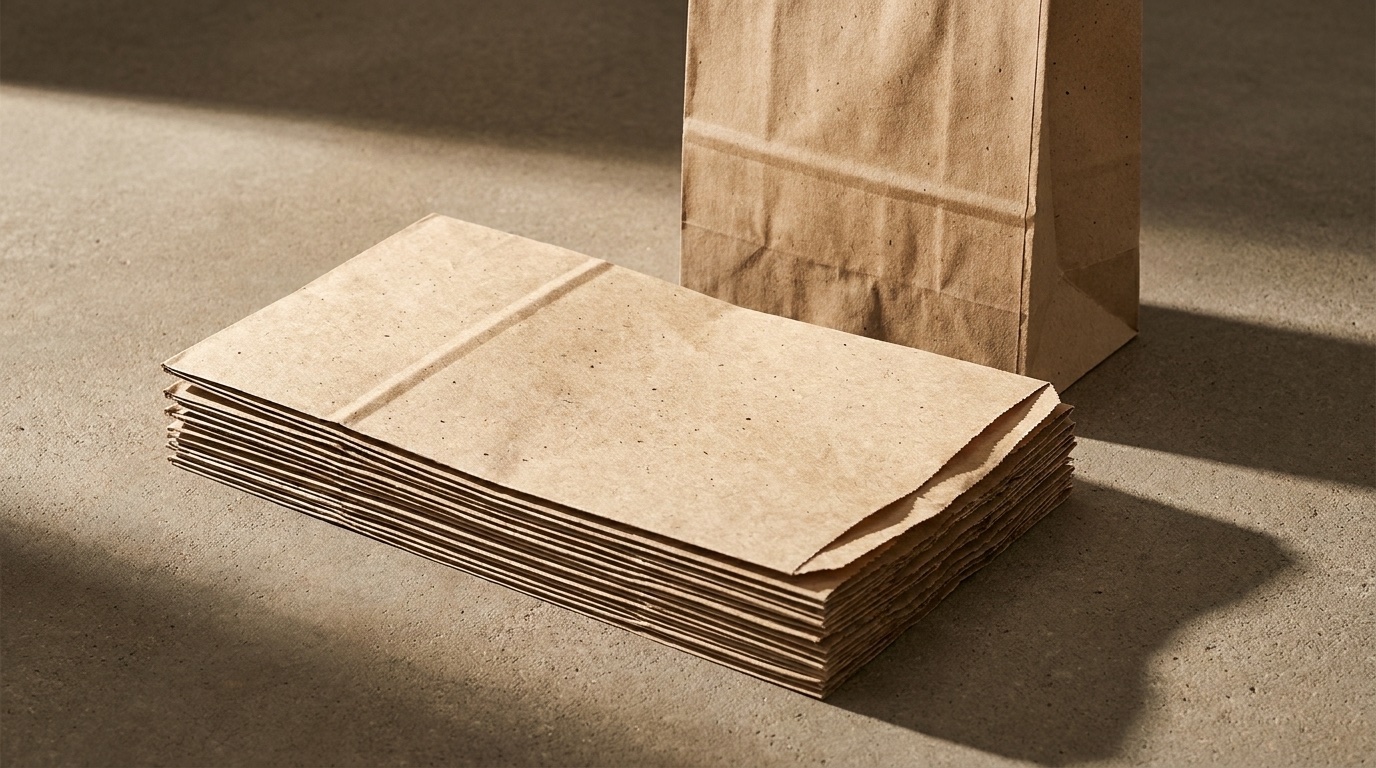
100% hemp fiber packaging, USDA Certified Biobased, made in the USA. Five sizes, blank or custom-printed, 10,000-unit minimum.
Get Pricing →