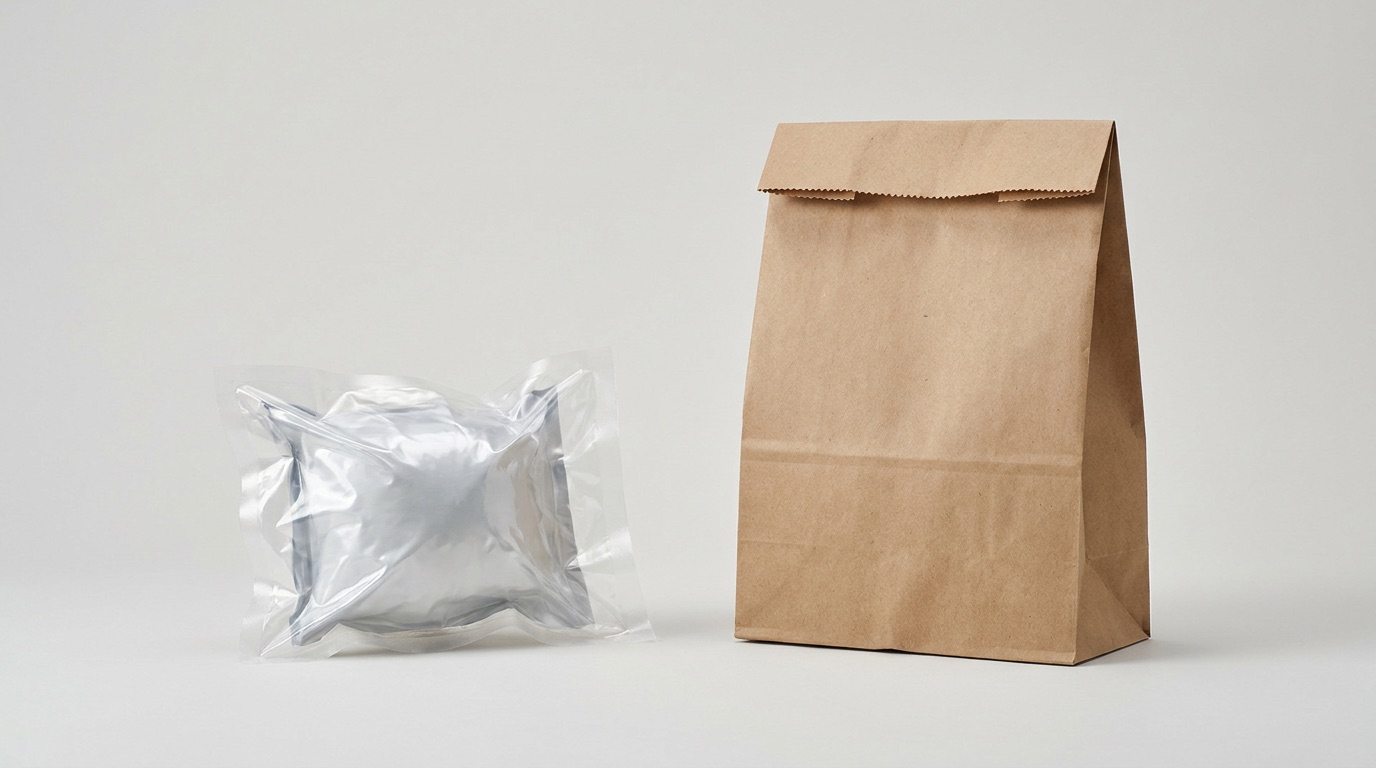
There is a sentence printed on millions of packages right now that is quietly becoming a legal problem: "100% recyclable."
Not because it is a lie, exactly. Because of the gap between what it technically means and what every customer reading it believes it means.
The number that breaks the claim
Plastic packaging in the United States is recycled at roughly 13%, according to US Plastics Pact data for 2024–25. EPA figures put the overall plastics recycling rate at 8.7%.
Now compare that to corrugated cardboard, which has historically been recovered at above 90%.
Same country. Same bins. Same customers. The difference is not consumer effort or education. It is the material and whether a real system exists to recover it.
So when a brand prints "recyclable" on a plastic package, that word is describing a theoretical capability. The customer reads it as a description of what will actually happen. Roughly seven out of eight times, it will not.
Regulators stopped finding this cute
For years the only risk was a bad news cycle. That is changing.
The FTC has been working through a revision of its Green Guides, the rules governing environmental marketing claims. The expected direction is tighter substantiation for terms like recyclable, compostable and carbon neutral — including limits on unqualified "recyclable" claims when most communities cannot actually accept the item. More documentation required, more exposure for brands that cannot produce it.
California moved first. SB 343 restricts the chasing-arrows symbol to materials genuinely recyclable in practice, not merely in theory. Other states are watching what happens.
Read that as a marketer and it says: every environmental claim on your packaging is becoming a claim you may have to defend with evidence.
Here is the part most brands get backwards
The instinct when the rules tighten is to fix the language. Add a qualifier. Swap "recyclable" for "recyclable where facilities exist." Get legal to bless the asterisk.
That is the wrong move, and it is wrong for a reason that has nothing to do with sustainability: you are making a promise about a system you do not control.
Whether your package gets recycled depends on municipal contracts, commodity prices for recovered material, sorting equipment in facilities you have never visited, and a customer's decision at a bin. You own none of that. But your logo is the thing on the package when the claim fails.
A claim about what your packaging is made from works differently. It is true in the warehouse, true on the shelf, true in a landfill, true in a compost pile. It does not depend on what a city council decided about its waste contract.
That is the entire strategic argument for changing the material instead of the label.
Why hemp answers the question at the source
Hemp fiber resolves the feedstock question before disposal ever enters the conversation.
It is an annual crop. Fiber hemp is harvested at roughly 100 to 120 days. A pulpwood plantation runs a 20 to 30 year rotation before harvest. Both are renewable on paper. Only one resets the land every single season, and "renewable" starts meaning something different when you look at the clock.
No trees. "Responsibly sourced" still means a tree came down. Certification manages how that happens; it does not change what happened. Hemp paper sidesteps the argument entirely, which is why we named the campaign Zero-Tree.
The certification is federal, not self-declared. Our bags are USDA Certified Biobased at 100% biobased content. That is a third-party program with documentation behind it, not a logo our marketing team designed. When the substantiation request arrives, that distinction is the whole ballgame.
It composts. Paper made from plant fiber returns to the ground. It does not need a specialized facility to stop being a problem.
The honest tradeoff
Hemp costs more per unit than conventional kraft. Our bags run roughly $0.12 to $0.235 depending on size and volume; commodity tree-kraft sits well below that. Anyone who tells you the switch is free is selling you something.
What you get for the difference is a claim that survives scrutiny. In a market where regulators are tightening substantiation rules and customers have gotten very good at spotting a hollow label, a defensible claim is not a soft benefit. It is risk reduction with a marketing upside attached.
And the gap narrows in practice more than the spreadsheet suggests, because a bag built from long bast fiber often does the job of a double-bagged cheap kraft.
So the question for big brands
You have a sustainability page. You have targets with years attached. You have a packaging line that says "recyclable" on a material the system recovers 13% of.
The label strategy has a shelf life, and regulators are the ones setting it. The material strategy does not expire.
You can keep negotiating with the asterisk. Or you can change what the thing is made of and stop needing one.
How exactly do you not choose hemp?
Ready to make the claim you can actually defend?
100% hemp fiber packaging, USDA Certified Biobased, compostable, made in the USA. Custom printing available, 10,000-unit minimum.
Talk to Us About Your Brand →Sources
Plastic packaging recycling rate: US Plastics Pact (2024–25). Overall plastics and corrugated recovery rates: US EPA, Containers and Packaging: Product-Specific Data and Plastics: Material-Specific Data. FTC Green Guides revision status and California SB 343: Federal Trade Commission environmental marketing guidance and California Truth in Labeling for Recyclable Materials law.